
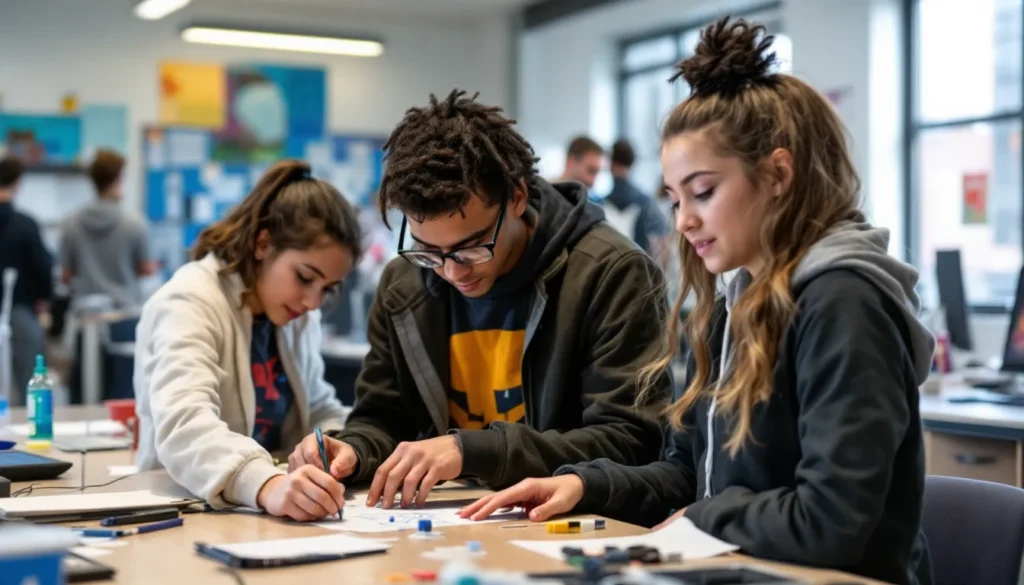
Middle school is a magical time when curiosity runs wild and young minds are eager to explore the wonders of science, technology, engineering, and math. But let’s face it, textbooks alone won’t cut it. Enter the world of engaging STEM activities that transform the classroom into a playground of innovation and creativity.
Overview of Middle School STEM Activities
Middle school STEM activities engage students through hands-on experience. These activities encourage curiosity and exploration in science, technology, engineering, and math. They provide opportunities for students to solve real-world problems, enhancing critical thinking skills.
Project-based learning represents a key component of STEM education. Students work collaboratively on projects, which helps develop teamwork and communication skills. Assessing their findings fosters a deeper understanding of concepts.
Incorporating technology into STEM activities enriches the learning experience. Students often use tools like coding software, 3D printers, and robotics kits. These tools not only capture interest but also prepare students for future technological challenges.
Creative challenges can also spark enthusiasm. For example, building model bridges with limited materials teaches engineering principles while encouraging innovation. Science experiments, such as water filtration projects, illustrate practical applications of scientific concepts.
Field trips to science museums or technology companies often provide insights beyond the classroom. Exposing students to professionals in STEM fields can inspire them to pursue related careers. Workshops and competitions, like science fairs, also encourage engagement and increase enthusiasm.
Emphasizing real-life applications of STEM knowledge enhances relevance. Students frequently connect classroom learning to everyday scenarios. Engaging activities motivate students to keep learning, bridging the gap between theoretical knowledge and practical application.
Overall, effective middle school STEM activities foster an environment of exploration and experimentation. By integrating various learning methods, educators create a dynamic space for students to thrive.
Benefits of Middle School STEM Activities


Middle school STEM activities provide significant advantages for students. They promote a hands-on approach that engages curiosity and stimulates exploration.
Enhancing Critical Thinking Skills
Critical thinking skills receive a boost through practical problem-solving activities. Students analyze challenges and develop solutions in real-time. Engaging in experiments cultivates logical reasoning and the ability to make informed decisions. Activities, such as designing simple machines or troubleshooting code, require students to think critically about their processes. An emphasis on inquiry encourages them to ask questions and seek answers, fostering intellectual growth. As students navigate obstacles, they learn to evaluate information and assess multiple perspectives. This analytical mindset prepares them for academic and personal challenges.
Promoting Teamwork and Collaboration
Teamwork and collaboration thrive in middle school STEM activities. Group-based projects create opportunities for students to work together towards common goals. They learn to distribute tasks according to individual strengths and skills. Students communicate their ideas, share differing viewpoints, and collectively problem-solve. These experiences help build interpersonal skills essential for future endeavors. Engaging in competitions or presentations fosters a sense of accountability and unity within teams. Through collaboration, students gain insights from peers, enriching their knowledge base. Thus, teamwork not only enhances project outcomes but also prepares students for collaborative environments in their future careers.
Popular Middle School STEM Activities
Middle school students actively engage in a variety of STEM activities that enhance learning through exploration and collaboration. The following sections provide insight into popular activities that inspire curiosity and critical thinking.
Hands-On Experiments
Hands-on experiments cultivate students’ understanding of scientific principles. Experiments like chemical reactions or physics demonstrations allow students to witness theoretical concepts in action. Building model rockets showcases principles of aerodynamics and propulsion, enabling students to connect theory with practice. Science kits often contain guided instructions, ensuring minimal setup and maximized learning. Engaging with experiments sparks enthusiasm and ignites inquiries about scientific phenomena. Overall, these experiences foster retention of knowledge through real-world application while promoting teamwork and problem-solving skills.
Technology Integration
Technology integration enriches the STEM experience for middle school students. Robotics kits provide an introduction to programming and engineering principles through playful, interactive challenges. Students can develop coding skills using platforms like Scratch or Python, enhancing their ability to create and solve problems. Virtual reality simulations allow learners to explore scientific concepts in immersive environments. Utilizing 3D printers, students can produce models that represent their designs and inventions, blending creativity with technological proficiency. Such integration not only prepares students for future careers but also reinforces collaboration and innovative thinking.
Tips for Implementing Middle School STEM Activities
Implementing effective middle school STEM activities requires thoughtful planning and the right resources. Teachers can enhance student engagement and learning outcomes with the following strategies.
Resources and Tools
Utilizing a range of resources is essential for engaging students in STEM activities. Consider hands-on kits for robotics and coding, which foster creativity and technical skills. Online platforms offer simulations that allow students to experiment safely. Incorporating real-life materials, such as recycled items for building projects, can also enhance resourcefulness. Additionally, collaboration with local science museums provides access to workshops and guest speakers. This exposure connects classroom learning with real-world applications, inspiring students further.
Classroom Management Strategies
Effective classroom management plays a vital role in the success of STEM activities. Establishing clear guidelines from the start ensures that all students understand expectations. Organizing students into small groups encourages collaboration and problem-solving. Assigning specific roles within each group can promote responsibility and accountability. Monitoring progress throughout the activity keeps students focused and engaged. Incorporating flexible time frames allows adjustments based on students’ needs, enhancing the overall learning experience.
Conclusion
Middle school STEM activities play a vital role in shaping students’ educational journeys. By fostering curiosity and encouraging hands-on experiences, these activities create an engaging learning environment that promotes critical thinking and problem-solving skills.
Through project-based learning and collaborative efforts, students not only grasp complex concepts but also develop essential interpersonal skills. Incorporating technology further enriches their experiences and prepares them for future challenges.
As educators and parents recognize the importance of these activities, they can significantly impact students’ academic success and inspire future career paths in STEM fields. Embracing innovative approaches ensures that students remain excited about learning and equipped for the demands of tomorrow’s world.


