
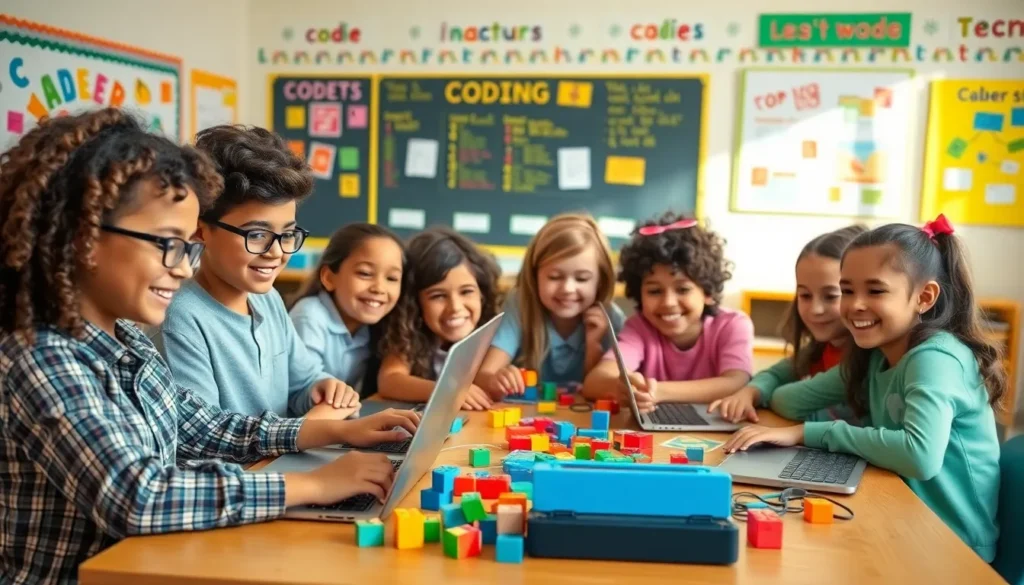
In a world where technology reigns supreme, teaching kids to code is like giving them a golden key to the future. Imagine a generation of little Einsteins crafting their own video games or building apps that could change the world. Sounds pretty cool, right? Coding isn’t just for tech whizzes anymore; it’s for every curious mind ready to explore the digital universe.
Overview of Coding for Kids
Coding for kids serves as a critical skill in today’s digital landscape. Children develop logical thinking and problem-solving abilities by engaging with programming languages. Exposure to coding aids in understanding technology, fostering creativity, and promoting collaboration among peers.
Many platforms offer age-appropriate coding resources. Scratch introduces younger learners to block-based programming, allowing them to create interactive stories and games easily. Tynker provides a more comprehensive platform for older children, combining game design with coding principles.
Parents and educators observe numerous benefits associated with coding education. Creativity flourishes as kids learn to conceptualize their ideas and turn them into reality. Additionally, coding fosters perseverance, as children face challenges and refine their projects through testing and iteration.
Schools increasingly incorporate coding into their curricula. Institutions adopt programs that teach students programming concepts alongside traditional subjects, integrating technology seamlessly. Many after-school clubs and summer camps also focus on coding, providing fun environments for learning.
Research indicates that early exposure to coding influences future career choices. Statistics show that individuals with coding skills earn, on average, 20% more than their non-coding peers. Market demand for technology professionals continues to rise, making coding an advantageous skill for students in various fields.
Engaging kids in coding projects aids their understanding of computer science concepts. They explore topics like algorithms, debugging, and data structures through hands-on activities. As children progress, their coding journey becomes an avenue for lifelong learning, equipping them with the tools necessary to thrive in a tech-oriented society.
Benefits of Learning to Code Early

Learning to code early offers numerous advantages for children, enhancing their skills and understanding of the digital world.
Cognitive Development
Cognitive development improves through coding experiences. Kids learn to think critically as they analyze problems and explore solutions. The process of writing code encourages creative thinking, enabling them to visualize concepts and structures. As they debug their projects, they develop persistence and resilience, understanding that errors are part of learning. Engaging in coding strengthens memory and information retention, as they need to recall and apply concepts regularly. Educational platforms like Scratch and Tynker stimulate these cognitive skills by introducing children to game mechanics and logic structures.
Problem-Solving Skills
Problem-solving skills are essential in today’s environment. Coding teaches children to approach challenges methodically. When faced with obstacles, they must dissect issues into smaller components, promoting analytical thinking. Strategies such as testing, evaluating, and refining ideas within coding projects cultivate a solution-oriented mindset. Through collaborative coding environments, kids learn to communicate their thought processes and discuss different solutions with peers. This teamwork fosters social skills, enabling them to navigate complex challenges effectively in real-world scenarios. These experiences set a solid foundation for future academic and career endeavors.
Popular Coding Languages for Kids
Learning coding languages can greatly benefit kids, introducing them to programming concepts in an engaging way. Below are some of the most popular coding languages designed specifically for young learners.
Scratch
Scratch serves as an excellent introduction to coding for kids aged 8 and up. This block-based programming language allows users to create animations and games using drag-and-drop functionality. Projects can be shared within the Scratch community, encouraging collaboration and feedback. Children explore logical thinking by arranging blocks to represent code. Furthermore, using Scratch enhances creativity as kids design unique projects with visual and audio elements. The friendly interface fosters a fun learning environment, making coding less intimidating. Research shows that over 40 million creators worldwide utilize Scratch, making it a solid choice for young coders.
Python
Python stands out as a versatile language suitable for kids aged 10 and older. It boasts a simple syntax that mimics natural language, making it easy for beginners to grasp basic programming concepts. Many educational platforms offer interactive Python courses, enabling kids to work on small projects right away. Games and applications serve as engaging project ideas, reinforcing both coding skills and problem-solving abilities. Additionally, Python’s extensive libraries support advanced projects, paving the way for future learning. Studies indicate that familiarity with Python can provide a strong foundation for a career in technology, making it a wise choice for aspiring coders.
Best Coding Platforms and Resources
Numerous platforms and resources exist to support kids in their coding journey. They cater to various age groups and skill levels, ensuring children find suitable tools for their learning.
Online Courses
Interactive online courses offer structured learning for kids interested in coding. Websites like Code.org and Khan Academy provide engaging lessons that cover fundamental programming concepts. These courses include video tutorials and hands-on projects, which enhance understanding and retention. Children can progress at their own pace, making the learning experience more enjoyable. Additional platforms like Udemy and Coursera also feature specialized courses, enabling kids to dive deeper into specific programming languages or technologies.
Coding Apps
Several coding apps make learning fun and accessible for young learners. ScratchJr encourages creativity through its simple drag-and-drop interface, perfect for children aged 5 to 7. CodeSpark Academy offers games that teach coding fundamentals and problem-solving. For older kids, platforms like Hopscotch and Tynker present coding challenges and projects that reinforce skills in a playful environment. Most of these apps incorporate gamification elements, motivating children to explore coding further while enjoying their learning experience.
Engaging Methods to Teach Coding
Teaching coding can incorporate various engaging methods that capture children’s interest. These methods enhance learning experiences while developing essential skills.
Gamification
Gamification effectively introduces coding concepts through interactive gameplay. Educational games allow children to solve problems in a fun, dynamic way. Platforms like CodeCombat and LightBot offer challenges wrapped in game elements, motivating kids to progress. This methodology promotes healthy competition and teamwork, encouraging them to share strategies and learn collaboratively. Statistics show that children engaged in gamified learning retain information better and display increased enthusiasm for coding tasks.
Hands-On Projects
Hands-on projects play a crucial role in solidifying coding knowledge. By creating tangible results, kids witness the impact of their code. Projects could include building simple websites, creating apps, or designing games with user-friendly platforms like Scratch or App Inventor. These experiences foster creativity and critical thinking, allowing children to customize their projects. Completing hands-on tasks ensures kids gain a practical understanding of coding principles and enhances their problem-solving abilities. Active participation results in deeper learning engagement and fosters a sense of accomplishment.
Teaching kids to code opens up a world of opportunities. It not only equips them with vital skills for the future but also fosters creativity and problem-solving abilities. As children engage with coding, they develop critical thinking and resilience that will serve them well in various aspects of life.
With numerous resources available, from interactive platforms to engaging apps, coding education has never been more accessible. Schools and communities are recognizing its importance, integrating coding into curricula and offering extracurricular programs.
By encouraging kids to explore coding, parents and educators are setting the stage for success in a technology-driven world. Embracing coding today can lead to a brighter and more innovative tomorrow for the next generation.


